Best Smell-Proof Storage Jars for Dry Herb
Smell-proof storage is really three separate problems -- odor, light, and humidity. Here's how to solve all three with the right jar and packs.
Disclosure: This article contains affiliate links. If you buy through them we may earn a commission at no extra cost to you.
What's the best smell-proof storage for dry herb?
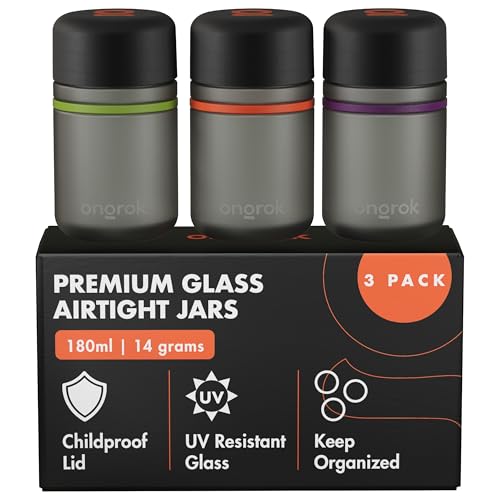
An airtight glass jar with a silicone gasket seal, like the Herb Guard 1oz jar (around $27) or an Ongrok glass jar 3-pack (around $20), combined with a two-way humidity control pack like Boveda's 62% RH packs (around $18 for 10), covers the three variables that actually matter for storage: airtightness, UV exposure, and humidity. Smell containment specifically comes down to an airtight seal -- odor compounds escape through gaps and porous materials, not through glass or properly-sealed silicone. A gasket-sealed glass jar with a humidity pack addresses smell, freshness, and UV exposure together; a jar alone only solves the first one.
Airtight seal is what actually stops smell
No spam. Unsubscribe anytime.
Odor escapes through any gap in a container, however small, and through materials that are naturally porous, like some plastics or unlined cardboard. A jar with a compression-fit silicone gasket -- the mechanism both Herb Guard and typical mason-style jars use -- forms a continuous seal around the entire rim rather than relying on friction alone. Ongrok's UV-tinted glass jars use the same gasket principle while adding a colored glass tint, which addresses a second, separate variable.
UV exposure degrades material over time
Clear glass lets light through, and prolonged light exposure is a known factor in degrading plant material over time, independent of smell or humidity. Amber or other UV-tinted glass jars block a meaningful portion of that light while still being fully transparent enough to see contents. This is a materials-storage consideration, not a health claim -- it affects how the material holds up in storage, the same way light affects the shelf life of many dried goods.
Humidity control is a separate variable from both
Even a perfectly sealed, UV-blocking jar doesn't manage humidity on its own -- material inside a sealed container can still dry out or, in humid climates, retain excess moisture, both of which affect texture and vaporization consistency. Two-way humidity packs like Boveda's are designed to release or absorb moisture to hold a target relative humidity (Boveda's packs are sold in fixed percentages, e.g., 62%) inside a sealed container, buffering against whatever ambient conditions the jar is stored in.
Putting the three together
| Variable | What addresses it | Product example |
|---|---|---|
| Smell/odor | Airtight gasket seal | Herb Guard, Ongrok glass jars |
| UV/light exposure | Tinted or opaque glass | Ongrok UV-tinted jars |
| Humidity | Two-way humidity control packs | Boveda 62% RH packs |
A single jar that's airtight but clear addresses smell but not UV. Adding a humidity pack inside any airtight jar addresses the third variable regardless of tint. Most owners settle on a tinted, gasket-sealed jar with a humidity pack dropped inside as the combination that covers all three at once.
Silicone, glass, or metal -- material matters too
Glass is the most common material for a reason: it's non-porous, doesn't retain odor in the material itself the way some plastics can over time, and doesn't react with the humidity pack's moisture exchange. Silicone gaskets (the seal itself, not the jar body) are the standard sealing material because they compress to fill gaps a rigid material can't, but the jar body should be glass or another non-porous, non-reactive material rather than a soft plastic that can absorb odor into its surface over repeated use. Metal tins seal well but tend to be opaque, which solves UV exposure automatically at the cost of being unable to see contents without opening the container.
If you want more choice than the three Amazon listings here, specialist smoke shops treat stash gear as a category of its own -- Headshop.com lists thousands of smoking accessories and storage products, which is where to look for an odd size or an opaque tin rather than a glass jar. It's an adult smoke shop, so the catalogue runs to bongs and dab rigs as well.
Jar size and how much to buy
Storage jars are typically sized for a given quantity, and matching jar size to how much you actually store at once matters more than it seems -- an oversized jar leaves excess air space inside, which gives odor compounds and ambient moisture more room to interact with the material before a humidity pack fully buffers the space. A 1oz jar like the Herb Guard suits a small personal supply, while stacking a few smaller jars (as in the Ongrok 3-pack) lets you portion material into separate sealed containers rather than repeatedly opening one larger jar and breaking its seal each time.
Where to store jars once they're sealed
Even a well-sealed, tinted jar benefits from being kept somewhere cool and away from direct light and temperature swings -- a closet shelf or drawer rather than a windowsill or near a heat source. Temperature fluctuations can affect the humidity pack's equilibrium point slightly faster than a stable environment would, so a consistent storage spot reduces how often the pack needs to work to maintain its target humidity level. None of this replaces the jar's seal or the humidity pack itself -- it's a complementary habit that extends how long both perform as intended.
Pairing storage with your grinder routine
Freshly ground material benefits from the same storage logic as whole material, so it's worth loading ground portions straight into a sealed jar rather than leaving them exposed on a grinder tray between sessions. If you haven't settled on a grinder yet, see our best grinder guide for matching grind consistency to your vaporizer -- the two purchases work together as a single prep-and-store routine rather than separate decisions. Good storage is also one of the few genuinely low-cost parts of owning a vaporizer long-term; see our running costs breakdown for how jars and humidity packs compare to other ongoing expenses.
The bottom line
For smell-proof storage that also protects against light and humidity swings, pair a UV-tinted, gasket-sealed glass jar with a two-way humidity control pack -- a jar alone only solves the odor problem.
Affiliate Disclosure