DynaVap Heating Guide: How 'The Click' Actually Works
How DynaVap's bimetal click mechanism works, why over-torching risks combustion, and how torch technique compares to induction heater consistency.
Disclosure: This article contains affiliate links. If you buy through them we may earn a commission at no extra cost to you.
What Does "The Click" Mean on a DynaVap?
DynaVap's tips use a bimetal element inside the cap that physically expands as it heats, and the audible "click" is that bimetal reaching a specific temperature threshold and snapping to a new shape — a mechanical event, not an indicator of flavor or vapor quality, per DynaVap's published product descriptions. The key decision factor for new owners is timing: the click signals that the tip has reached its working range, and continuing to heat past it raises the risk of combustion (actual burning) rather than vaporization. DynaVap devices have no digital display, so the click is the only built-in signal a user gets — everything else is technique, whether that's a torch or an induction heater.
The Bimetal Mechanism, Mechanically Explained
No spam. Unsubscribe anytime.
Inside a DynaVap tip sits a bimetallic strip — two metals with different expansion rates bonded together. As the tip heats, the two metals expand at different speeds, bending the strip until it reaches a shape threshold and snaps audibly. This is standard bimetal thermostat behavior, the same physical principle used in mechanical oven thermostats and older analog thermometers. It's a fixed mechanical property of the metal, not something adjustable per session — the click happens at roughly the same temperature threshold every time on a given tip.
What Happens if You Heat Past the Click
Continuing to apply heat after the click raises tip temperature further, and past a certain point that means combustion — actual burning of the material, producing smoke and char rather than vapor. DynaVap's guidance is to remove heat at or shortly after the click and begin drawing, not to keep the torch on the tip. Owners consistently report that over-torching is the most common early mistake, since a butane torch's flame is considerably hotter than a heat gun or induction coil and reaches combustion temperatures quickly if held too long.
| Heating Tool | Reported Style | Consistency |
|---|---|---|
| Butane torch | Fast, high heat, technique-dependent | Varies with user timing |
| Induction heater (e.g., the Wand) | Fixed induction coil, consistent ramp | More repeatable click-to-click |
Torch Technique vs. Induction Consistency
A butane torch heats the tip fast but requires the user to judge distance, angle, and duration — three variables that change the outcome each time. An induction heater like the Ispire Wand instead uses an electromagnetic coil tuned to the tip's metal, producing a more repeatable heat curve session to session, per Ispire's product materials. Neither approach is "better" for vapor quality itself; the difference is repeatability and convenience. For a full comparison, see our induction heater vs. torch guide and DynaVap without a torch.
Choosing Your Heat Source
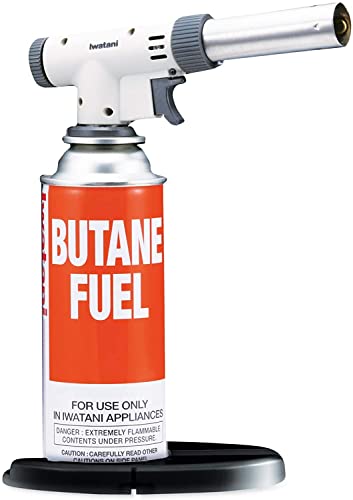
If you're sticking with a torch, a windproof, refillable model gives the most consistent flame for judging click timing: Iwatani Pro2 Check price on Amazon → or the Sondiko torch with a visible fuel window Check price on Amazon →. If you'd rather skip the torch entirely, the Ispire Wand induction heater See current price → is built specifically for DynaVap tips.
Choosing a Tip
DynaVap's core tip lineup ranges from the compact "B" up to the larger M7 and M7 XL, which hold more material per load and click at a comparable threshold. See our M7 vs. M7 XL comparison for load-size differences: DynaVap M7 See current price → · DynaVap M7 XL See current price →.
Why the Click Threshold Stays Consistent Over Time
Because the bimetal element is a passive mechanical part rather than an electronic sensor, it doesn't drift the way a digital thermostat's calibration can drift with firmware or battery age. The click threshold on a given tip is essentially the same on day one as it is years later, provided the O-ring seal is maintained and the tip hasn't been damaged. That mechanical stability is one reason owners consistently report DynaVap tips as long-lived compared to electronic devices with batteries — there's no calibration to maintain, only the physical seal. Our O-ring maintenance schedule covers the one wear part that does need periodic attention.
Learning the Click Before Switching Tools
New DynaVap owners are often better served by starting with a torch, even if they plan to move to induction heating later, since a torch's fast heat-up makes the click's timing easier to recognize and internalize on the first few sessions. Once the click's timing is familiar, an induction heater like the Wand reproduces roughly the same window each time without requiring the same level of active flame judgment — see our full induction heater vs. torch comparison for how the two heating styles stack up once you've learned the click.
Fuel and Flame Considerations for Torch Users
A stable, adjustable flame makes the click easier to time consistently. Refillable butane is standard for DynaVap use, and keeping a spare fuel supply on hand avoids running a torch dry mid-session: Colibri premium butane refill Check price on Amazon →.
The bottom line
The click is a bimetal thermostat reaching its threshold, not a flavor or vapor cue — heat to the click and stop, since continuing past it moves the tip toward combustion rather than vaporization.
Affiliate Disclosure